
Five Questions to Ask Before the Horn of Africa Shifts
Somalia’s president keeps flying to Addis Ababa. Here’s what you should be asking about why, before the answers become obvious to everyone.

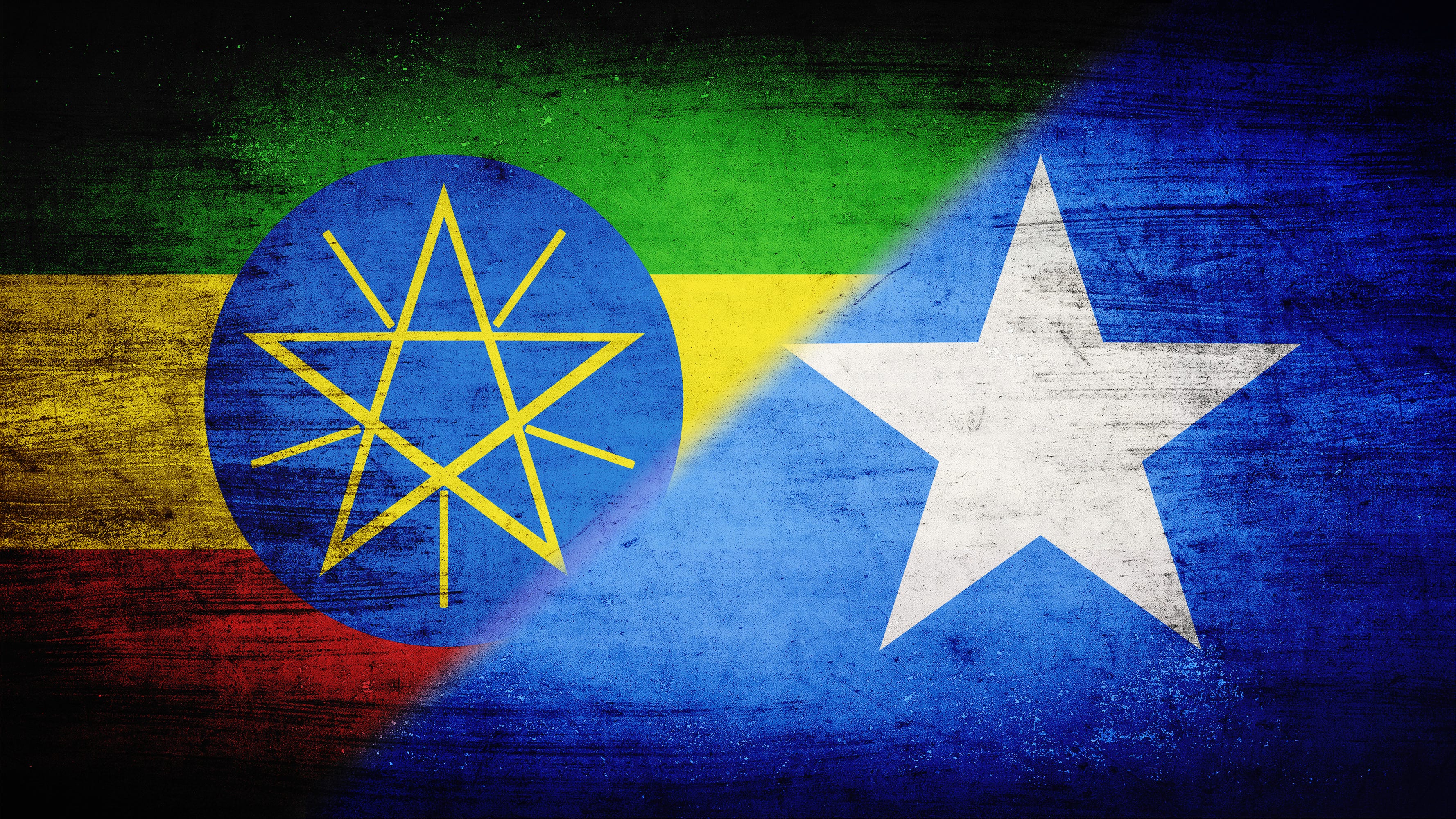
A single presidential visit is diplomacy. A fourth in six months is a warning light.
When Somalia’s President Hassan Sheikh Mohamud landed in Addis Ababa this week for talks with Prime Minister Abiy Ahmed, the official readout was the one you’d expect: regional security, stability, economic cooperation. It was the same readout that accompanied his last three trips. And each time, the communiqué stayed quiet about what actually explains the frequency.
A single trip can be protocol. But a head of state does not return to the same capital again and again unless he considers the problem urgent. The repetition is a tell with Mogadishu revealing through its own behavior where it thinks the real pressure sits. The Horn of Africa is moving toward a reckoning over two things most outside observers treat as settled: Somalia’s territorial integrity, and the foreign troop presence that keeps its trade routes and ports secure..
If you have exposure in the region, whether in ports, logistics, energy, telecoms, insurance, or personnel, these are the questions to be asking now, while the answers are still contested.
1. Is Israel’s recognition of Somaliland a one-off, or the first domino?
At the end of 2025, Israel became the first UN member state to formally recognize Somaliland, the breakaway northern territory Mogadishu still claims. For thirty-five years, Somaliland’s independence was a fact on the ground with no signature behind it. Now it has one.
The condemnations arrived on schedule, from the African Union, the Arab League, Turkey, Egypt, and the EU. But condemnation is not containment. The question that matters isn’t whether the recognition was popular. It’s whether it stays a single anomaly or becomes a pattern.
The candidates to watch next are Ethiopia and the UAE, the two with the deepest ties to Hargeisa and the clearest reasons to move. Whether either actually does, and what would tip them, is the question that matters. Watch where Hassan Sheikh is spending his time. It tells you where he thinks the next domino sits.
2. What is Ethiopia’s price, and is Mogadishu meeting it?
Ethiopia is landlocked, and a landlocked state’s hunger for a coastline does not go away. Addis Ababa signed a sea-access memorandum with Somaliland in early 2024 that ruptured relations with Mogadishu before Turkish mediation patched it over. The rupture is repaired on paper. The underlying want is not.
That is the real subtext of four presidential visits. Hassan Sheikh is running a containment campaign, and containment has a cost that is economic, political, and diplomatic all at once. The question isn’t whether he’s trying to keep Ethiopia on side. It’s what he’s had to put on the table to do it, and whether that offer holds across the next election cycle in either capital.
We have a view on what’s actually being traded in those rooms. It is not what the communiqués describe.
3. What happens to security if the money runs out quietly?
Publicly, Ethiopia has agreed to keep its troops in Somalia, and the African Union’s stabilization mission was extended through the end of 2026. On paper, continuity.
Underneath the paper, the mission is running on fumes, with no confirmed funding pledged for 2026, inherited debt from its predecessor, and traditional donors signaling fatigue rather than fresh commitments. Here’s the thing about a peacekeeping mission that runs out of money: the exit rarely arrives as an announcement. It arrives as a drawdown. Unpaid contingents thin out. Bilateral arrangements quietly replace multilateral ones. The mission keeps its name while losing its mass.
The question worth pressing is not “will there be a formal withdrawal?” There won’t be. It’s “is a quiet drawdown already underway, and where?” The answer to where is the whole game, because it determines which specific districts, routes, and assets are about to lose their cover. That’s a map we’re watching closely.
4. Who controls the coastline your cargo moves through?
Every question above comes back to one physical fact: the Gulf of Aden and its ports carry real trade today. Berbera handles cargo now, and the shipping lanes through the gulf are among the busiest in the world. This is infrastructure your goods likely already move through.
If Somaliland’s status becomes a live contest among regional and Gulf powers, and eventually Washington, then the governance of that coastline stops being settled. Recognition is not an abstract diplomatic gesture when it changes who signs the port concessions, who guarantees the security around them, and whose flag those guarantees are worth anything under.
Most outside assessments treat the coastline as fixed infrastructure. The more useful question is which stretches are politically contestable over the next 18 months, and that is exactly the kind of judgment that doesn’t come from a map alone.
5. What would you need to see to act, and would you see it in time?
This is the question behind the other four. The events that reshape a region are usually visible in advance to people watching the right signals, and invisible to everyone else until they’re headlines.
Three of those signals are already live: any softening in Addis Ababa’s posture on Somaliland; the resolution, or slow collapse, of the peacekeeping mission’s funding; and al-Shabaab’s operational tempo in contested districts, the most honest indicator in the region because it moves when it senses space, before any communiqué admits the space exists.
The frequency of Hassan Sheikh’s visits is itself a signal. The state closest to the problem is treating it as urgent, and spending its most scarce resource, leadership attention, accordingly. The open question is whether you’re taking it as seriously as he is.
The events that reshape the Horn rarely announce themselves. They surface first as patterns like this one, visible to anyone reading the region closely and invisible to everyone else until the headlines catch up. Seeing them early takes expertise, experience, and presence on the ground.
That is what we do. 14 North guides businesses and organizations through Sub-Saharan Africa’s emerging and frontier markets. If you need deeper insight into Africa’s markets, or want to discuss how their dynamics affect your decisions, contact us at info@14nstrategies.com or visit www.14nstrategies.com.